 Food
Vegetarian & Vegan in Bangladesh
What to order, what to watch for and how to ask for food without meat, fish, egg or dairy.
 Grand Plaza, 2nd floor, Wireless, Moghbazar, Dhaka-1217

রাখের উপবাস, Bangla for Rakher Upobash
For five evenings each November, thousands of people sit fasting in a temple courtyard near Dhaka and light lamps at dusk. Here is what it is, when it happens and how to see it.
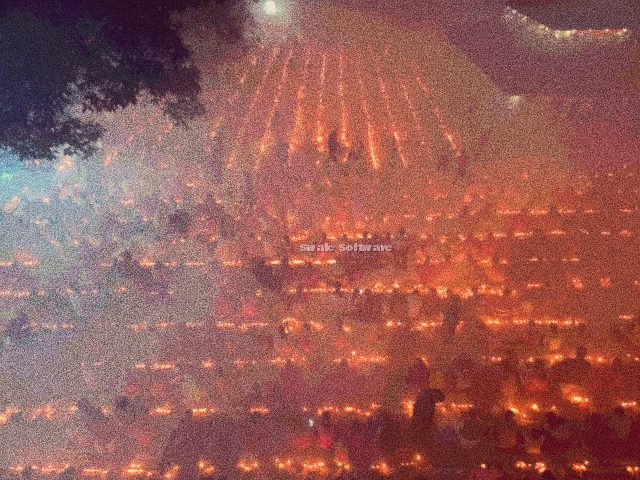
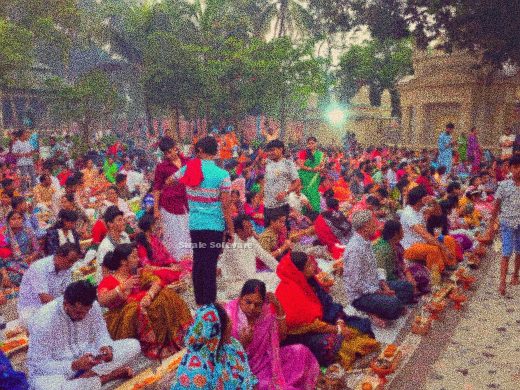
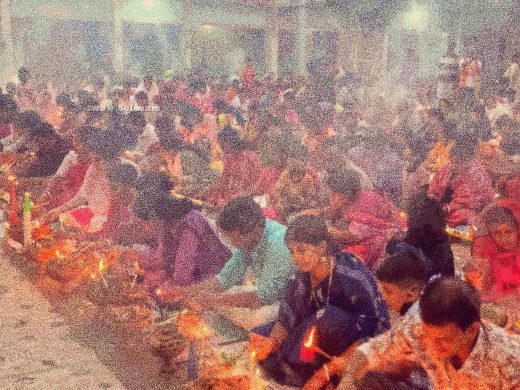
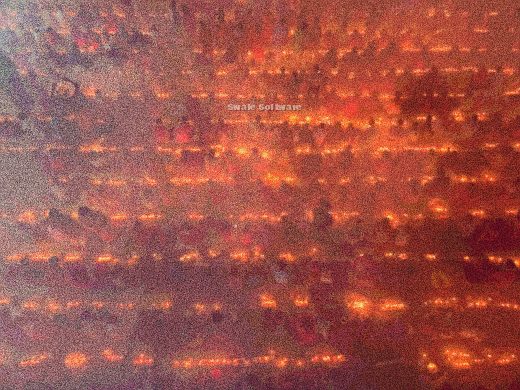
Late on a November afternoon, the courtyard of the Sri Sri Lokenath Brahmachari Ashram at Baradi fills with families sitting in long rows on the ground. They have eaten nothing since morning. In front of each of them is a row of small clay lamps. As the sun goes down the lamps are lit, incense is set smouldering, and within minutes the whole courtyard glows orange under a thick haze of smoke. Then everyone sits and prays until the flames go out.
This is Rakher Upobash, one of the most striking things to see in Bangladesh, and it happens about 30 km from Dhaka.
Rakher Upobash is a fast kept by Hindu followers of the saint Baba Lokenath Brahmachari. Upobash means fasting, and the vow is kept to ask for protection for the family, above all from illness. You will also hear it called Kartik Brata, after the Bengali month in which it falls, or Ghee Pradip Prajjalon, the lighting of the ghee lamps.
People keep the fast through the day, light their lamps and incense at dusk, and eat only once the lamps have burned down.
Lokenath Brahmachari is among the best-loved Hindu saints of Bengal. Tradition says he was born in 1730, spent decades as a wandering ascetic and lived to the age of 160. What is certain is that he spent his last years at Baradi, a village in Sonargaon in Narayanganj district, and died there in 1890. The ashram that grew up around his shrine is now a place of pilgrimage all year round.
His followers say that it was Lokenath himself who told them to fast in the month of Kartik and to burn lamps and incense, as a way of keeping cholera and smallpox from their homes. The epidemics have gone, but the vow has been kept ever since, and people now make it for the health and safety of their families in general.
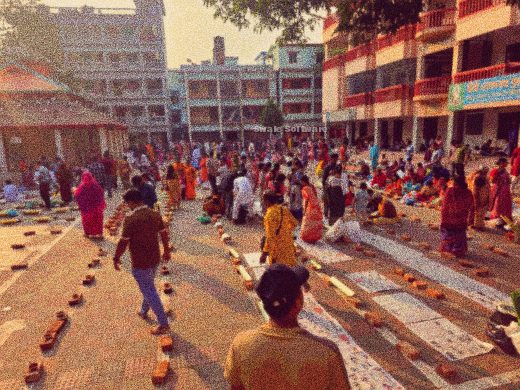
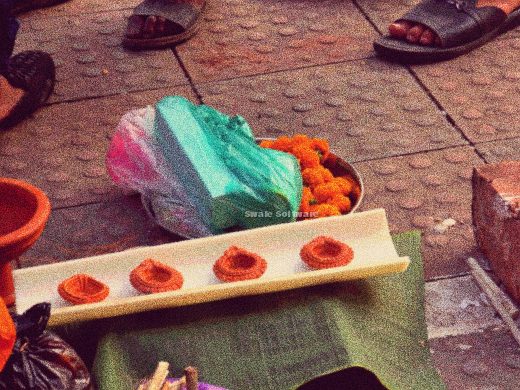
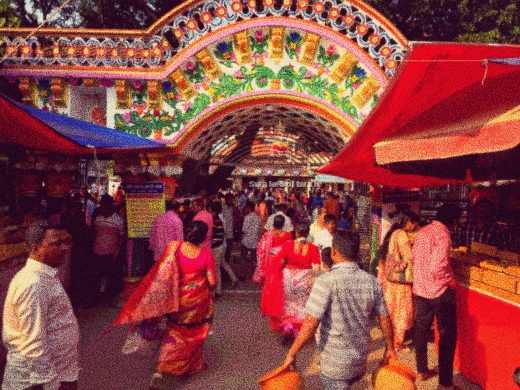
People start arriving in the early afternoon to claim a place. Each family lays out a banana leaf or a sheet of paper, sets its lamps on a strip of banana stem and arranges flowers, fruit and incense around them. Outside the gate, the lane is lined with stalls selling lamps, marigolds and snacks.
By about four o'clock the courtyard is full and there is hardly room to walk between the rows. A little after five, as the light fades, the lamps are lit and the incense follows. The smoke rises fast, and for the next half hour or so the courtyard is a field of small flames with people praying behind them. When the lamps burn out, the fast is over and families share the food they have brought.
The fast is kept on every Saturday and Tuesday in the last fifteen days of Kartik, which falls in the first half of November. That gives four or five evenings each year. In 2026 they were 3, 7, 10, 14 and 17 November.
The dates move a little each year with the Bengali calendar, and the ashram confirms them nearer the time, so check with us before you fix your flights. The largest crowds usually come on the Saturdays. The same vow is kept on a smaller scale at other Lokenath temples, including the one at Swamibag in Old Dhaka, but Baradi is where it began and where it is at its grandest.
Rakher Upobash is not part of a fixed tour, because it happens on only a few evenings a year. We arrange it as a private day trip from Dhaka with a car, driver and guide, or as an extra day on any tour that is in the country in early November.
It combines well with the rest of Sonargaon, the old capital of Bengal: the merchant houses of Panam Nagar and the folk art museum in the morning, a country boat on the Meghna, and then Baradi for the afternoon and evening. Several of our longer trips already call at Sonargaon, among them Highlights of Bangladesh and the Archaeological Trip to Bangladesh, and a Dhaka City Tour the day before makes a good pair.
Tell us which evening you would like and how many of you are travelling, and we will confirm the date and send you a price.
FoodWhat to order, what to watch for and how to ask for food without meat, fish, egg or dairy.
Tell us what you would like to see and what you want to spend, and we will plan the trip around you.